From football to human nature.
By CRLuismël.
Yesterday’s match left me thinking about something that goes far beyond football.
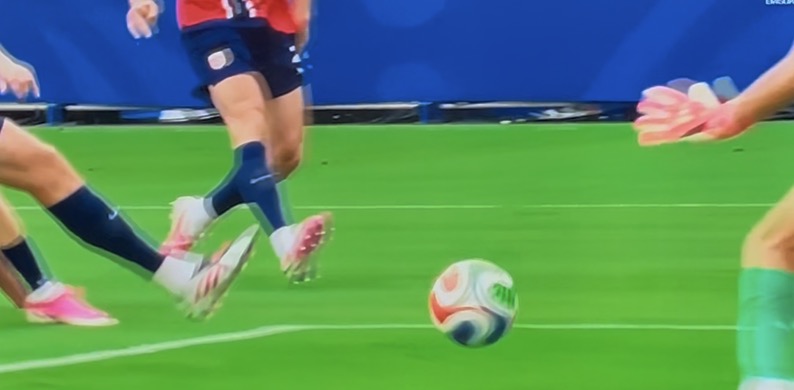
On several occasions, Erling Håland appeared to be in a promising position, yet the final pass never came. Whether those decisions were tactical, accidental, or simply the wrong choices under pressure is something only his teammates truly know.
At the same time, Håland experienced an extraordinary surge in global popularity. Social media exploded with memes, videos, songs, and discussions. Within days, he had become one of the most talked-about figures of the tournament.
That made me wonder.
When someone within a team suddenly becomes the center of the world’s attention, can that attention itself begin to affect the team’s internal dynamics?
Could admiration from millions unintentionally create tension among teammates?
Could excessive praise become a burden rather than an advantage?
History has shown us that teams do not fail only because they lack talent. Sometimes they fail because of ego, rivalry, poor communication, or the inability to place the collective objective above individual emotions.
Some football fans believe Norway missed opportunities against England by not finding Håland in decisive moments. Others disagree completely and argue that the match simply unfolded that way. None of us can know the true reason.
But the discussion raises an interesting question that extends far beyond football.
We’ve seen similar debates surrounding Portugal in previous World Cups, where many questioned whether Cristiano Ronaldo received the service expected from a player of his caliber. On the other hand, Argentina has often been praised for building a system where individual brilliance appears to strengthen the collective rather than divide it.
Perhaps the real question isn’t about Norway, Portugal, Argentina, Håland, or Ronaldo.
Perhaps the real question is this:
What happens to any group when one member begins to shine much brighter than everyone else?
Does admiration inspire others to improve?
Or does it quietly awaken comparison, insecurity, resentment, or even envy?
The same questions apply outside sports.
They apply in companies.
In universities.
In churches.
In governments.
Within families.
And yes, even among friends.
I’ve often wondered whether the same phenomenon occurs whenever someone starts receiving recognition. Is success always celebrated, or does it sometimes become an uncomfortable reminder of what others wish they had achieved?
Even on a personal level, I ask myself a similar question.
Do some people dislike the fact that I publish my own thoughts and reflections? That I write first, organize my ideas, and use technology only to polish my words rather than to replace my thinking?
I don’t know the answer.
What I do know is that envy has existed throughout human history. It has divided families, broken friendships, weakened organizations, and even altered the course of nations.
That is why so many philosophical and religious traditions have warned against it. Not because success is dangerous, but because our reaction to someone else’s success can reveal the best—or the worst—within ourselves.
Perhaps the greatest achievement is not becoming the brightest person in the room.
Perhaps it is learning to sincerely celebrate when someone else does.
C.R.Luismël